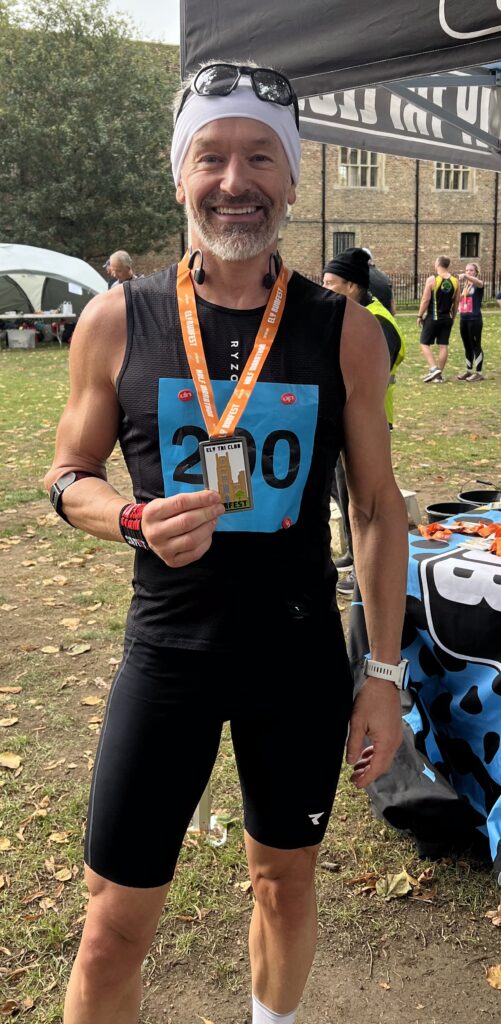
Time to run my local half marathon again, on a course that forms part of most of my weekend long runs. The forecast looked like it was going to play ball. In Cambridgeshire there is never no wind, but compared with last year’s storm conditions it was set to be a solid day for racing.
Ely is not a fast course. Around 6 km is gravel and compacted sand, and on the return half you spend a good part of the race working your way past the 10k runners, who set off after the half marathon field. The upside of knowing all this is that I have a good idea of when to push and where the race can be won.
RACE MORNING
One of the things I like about Ely is the late start. The race begins at 10am, but you need to get into town beforehand to collect your race number. So, alarm set for 7.45am, which gave me time for my current breakfast of choice – warm rice pudding with strawberry jam – before heading in for my number and then back home to warm up.
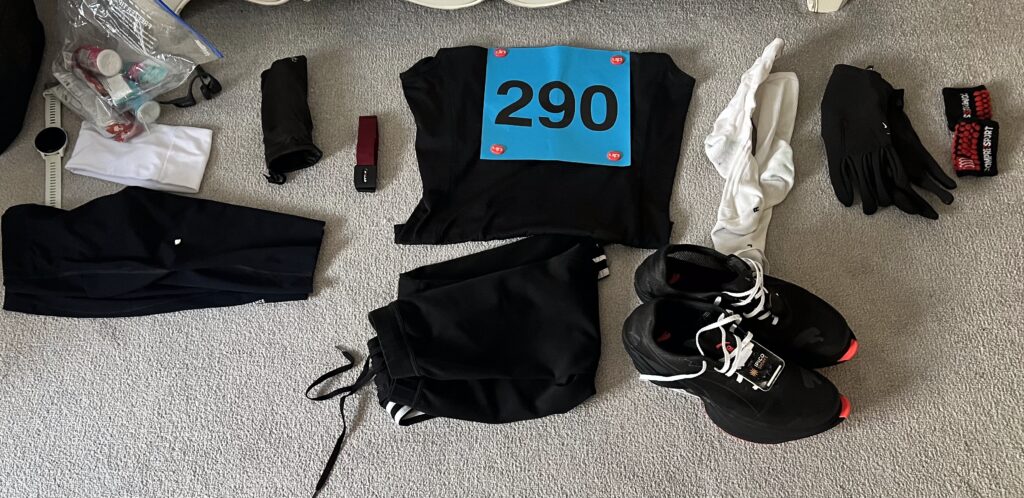
I made it to the race area for 9.30am and added a quick five minutes to the 20 minutes I had already done at home. Race ready.
You never know who is going to turn up at these races, but I thought that on a good day this was a course where I could (just) break 1:18. So I decided on 3:40/km pace. That would bring me in at around 1:17:20 – under the target, but with a little margin so I would not blow up if I was not quite 100%.
AND WE’RE OFF…
The race starts with a 300 m run to a very sharp 300–400 m downhill, before the course flattens out along the river. The start is key for race position, and by the bottom of the hill it was clear this was going to be a two-horse race. A race of old men.
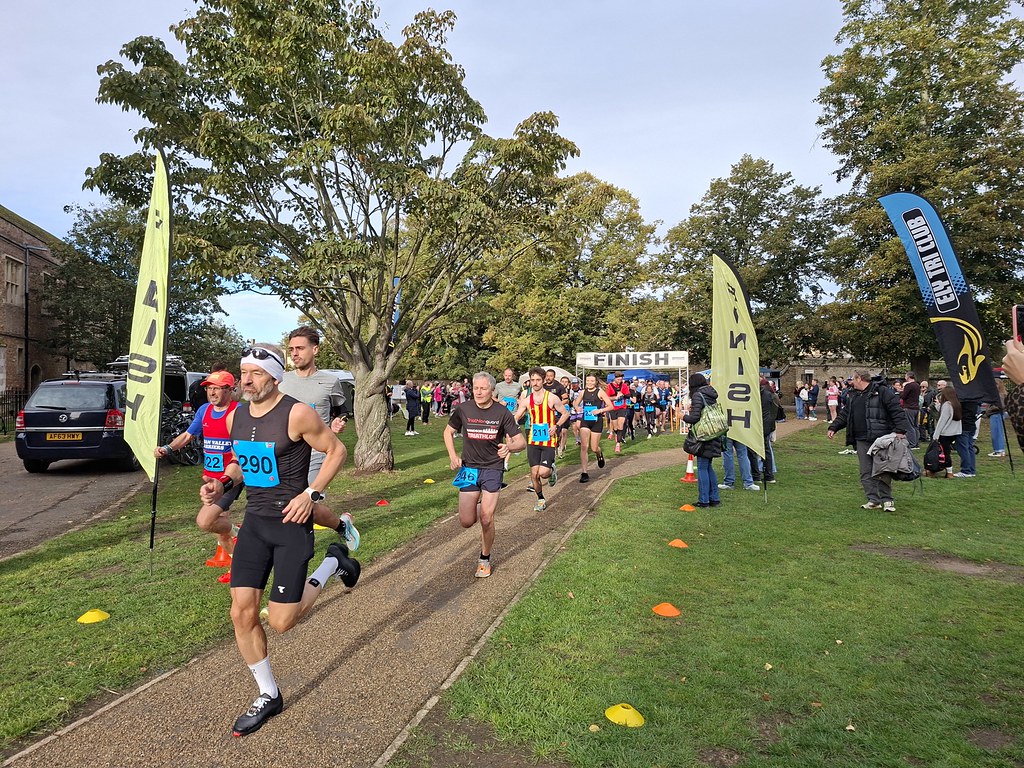
Race number 222 was Henry Drake, a well-known ultra-runner, and by the end of the downhill he had gone past me. My strategy was simple: stick to 3:40/km, and if that kept me on the back of him, all good.
By the turnaround the pace was still on. This is the point where you can grab some water, and when Henry pulled over for a drink I took the chance to push on. Heading back, the wind was in our faces. Henry got back on, then pushed ahead, and all I could do was try to follow.
About 60 minutes in, Henry made his break. He told me after the race that he did not want it to end in a sprint and this was his chance. At that point we had averaged 3:41/km for the first hour. He was still in sight, but once we hit the last 5 km and the traffic of the 10k field, it became difficult to keep contact or even see where he was.
CLOSING STAGES
Once into the crowd, the pace dropped off significantly as I tried to dodge the other runners. Over that 3 km stretch I averaged a little over 4:00/km, and the 1:18 half was slipping away. Unless Henry was going to blow up, the win was out of reach, so I just tried to claw back what time I could over the last few kilometres. Once past the bulk of the 10k runners I could get the pace back up to 3:45–3:47/km.
To give some context: over the first 15 km we had been averaging 18:30 per 5 km. The next 5 km took 19:44.
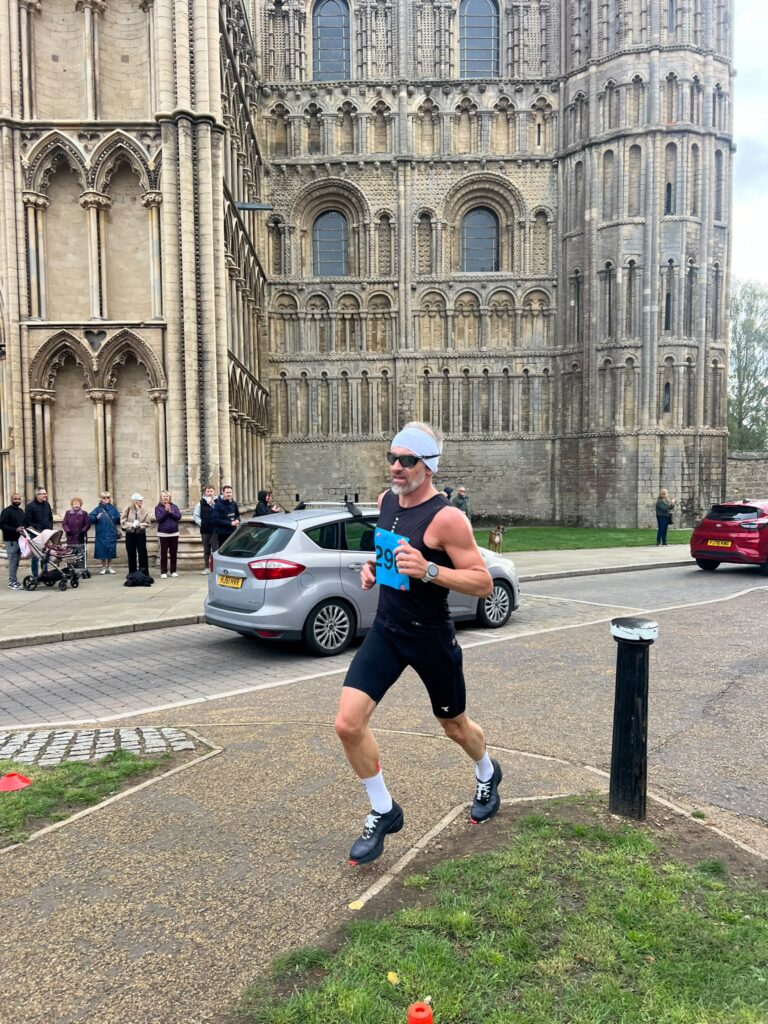
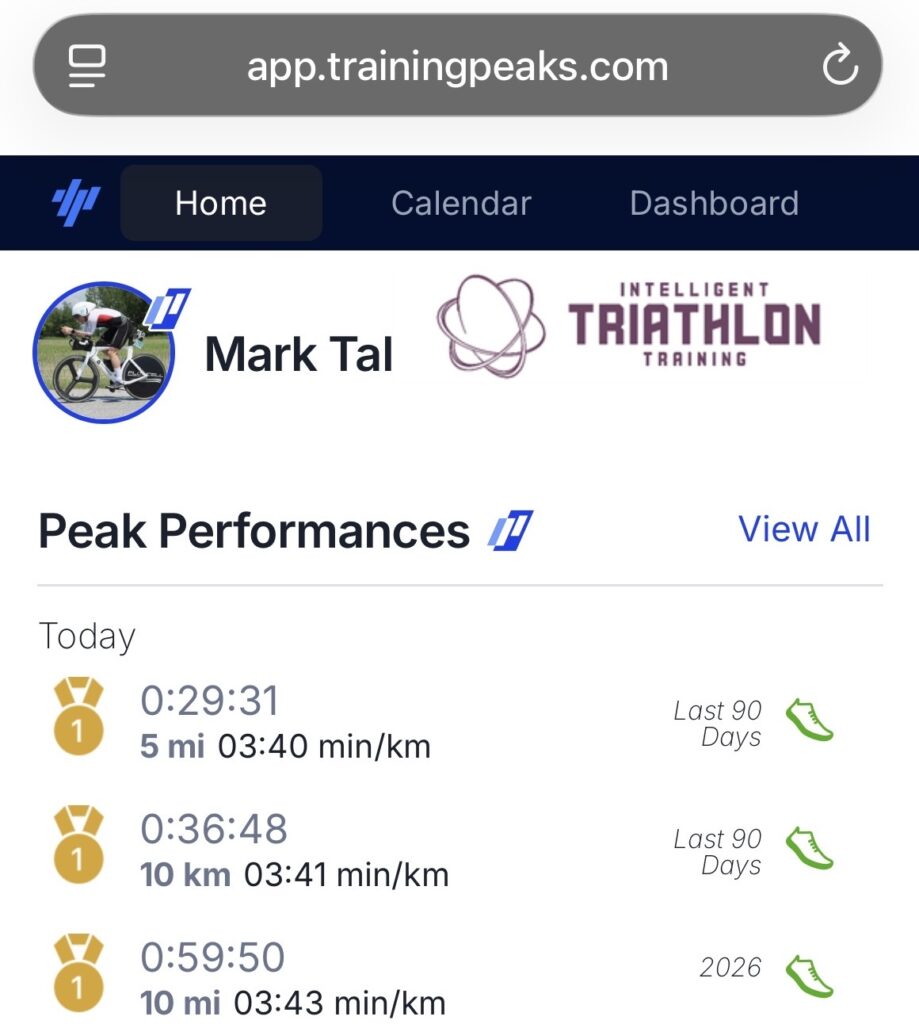
The last kilometre arrived and I buried myself, but I could not close the gap. By the finish Henry had put 50 seconds into me over those last few kilometres; the race had run away from me. My watch stopped at 1:19:09 and I took second place.
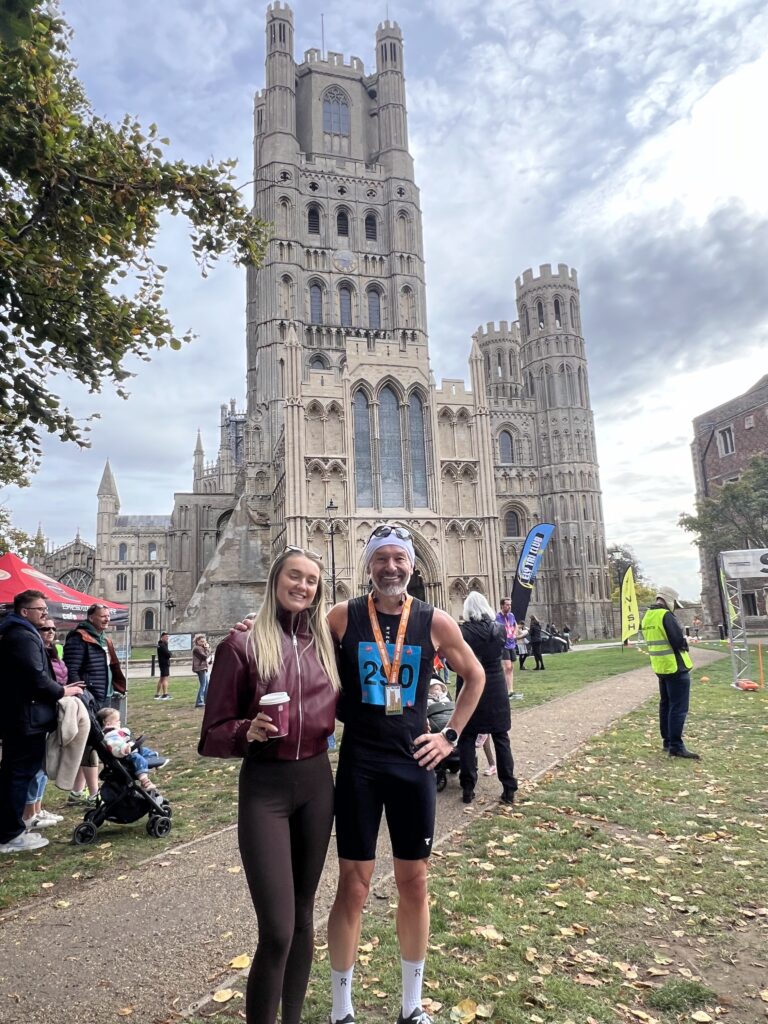
Henry was a deserving winner on the day. If I could re-run the race, I would have gone with him and taken the risk of blowing up. Once into the 10k traffic there would have been a chance to take a breather anyway, as the congestion forced the pace down for everyone. But this is racing, and you learn. Knowing the course is one thing; reconnoitring your event and going in with good tactics for how the race might unfold is what really pays off.
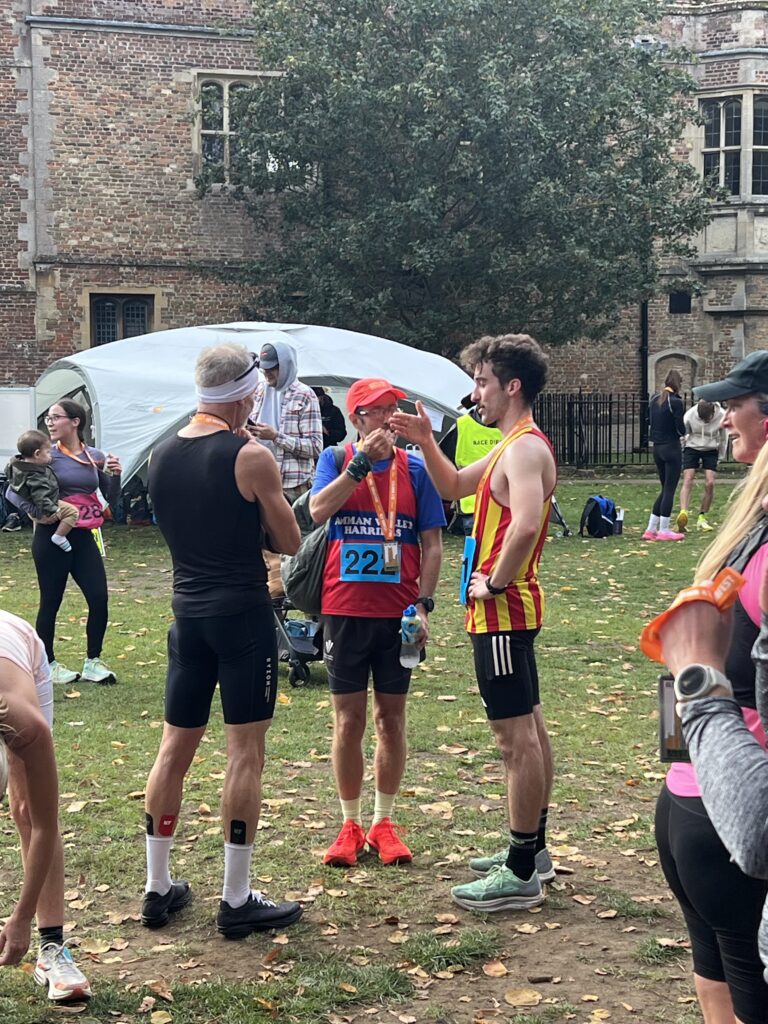
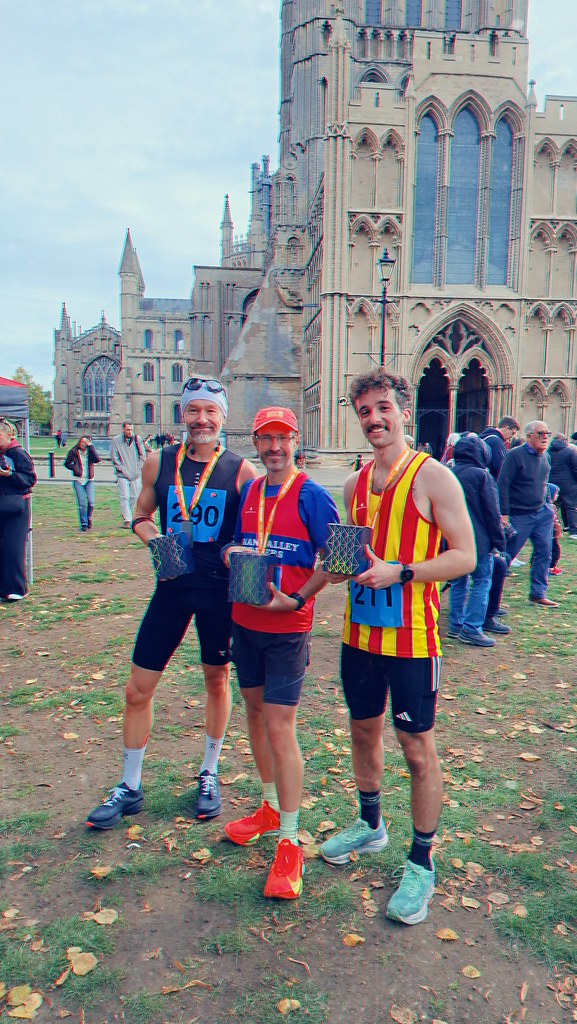
I just want to also give a big shout out to all the Ely Half Marathon volunteers (many of which are from local triathlon club). Without them events like this would not be possible. They have very long days given the Ultra start early doors and when I went to pick race number up at 8am they where out on course.
END OF THE SEASON
My aim this year was to get to the Valencia Marathon in great shape, and in the weeks leading into the Ely half my focus had been on longer 30 km weekend runs. However, real life is taking over. We are moving home in December, which brings other important considerations and takes time away from the volume I would need over the next six or seven weeks to be in good shape. We also did not have a moving date, so booking a hotel and flights was a risk I could not take. The marathon will have to wait until 2027.
It has been a great season, and I have been the fittest I have ever been as a runner, despite not breaking into 77 minutes or below. You need some luck, and the few races where I thought “this could be it” just did not pan out. Before this year I had not run a sub-80-minute half since 2022. This year I have done it twice, and with better pacing and race choice I could certainly have been in the 78s.
I am not yet sure where the next race will be, other than a few parkruns over the winter to keep the top end sharp and the motivation up. I will take a few weeks to plan out 2027, and I probably need to take on a coach to give the season better structure with specific aims.
Despite being in my early 50s, I still believe a 75-minute half and a 2:40 marathon are within my abilities. These are likely to be next year’s goals, but I need better race choice and training structured around those efforts. I also know I need more road running, and that is a fine balancing act: running on the road more than once or twice a week really ramps up my injury risk.
For the past two years I have had no real injuries (touch wood), other than a slightly sore left Achilles and a sore hip flexor on the same side. I think these are simply a result of the herniation in my lower back, which I will always have now and just need to manage with structured mobility and strength work.
As we all head towards Christmas, I wish you all well.